
Walk into almost any gym, cycling event, triathlon, wrestling tournament, or beach, and you’ll see people wearing spandex. For most, it’s just another high-performance fabric. It’s functional. It stretches, compresses, and breathes, helping athletes perform.
But for a growing community around the world, spandex has become something much more.
It inspires confidence. It fuels fantasy. It creates identity. It builds friendships. And yes, for many people it is undeniably erotic.
Yet despite decades of dedicated communities, online groups, meetups, creators, photographers, and enthusiasts, the spandex community often feels like the forgotten corner of the kink world. Leather has its events. Rubber has its conventions. Pup play has exploded into mainstream awareness. Sneaker fetish has become increasingly visible. But mention a spandex fetish, and you’re still likely to be met with confusion, jokes, or the question? Really? Tight workout clothes??
Maybe it’s time we changed that conversation.

More Than Just Tight Clothing
One of the biggest misconceptions about a spandex fetish is that it’s simply about seeing someone in tight clothing.
It’s not.
Just as leather isn’t simply about jackets and latex isn’t simply about shiny rubber, the appeal of spandex often lies in a combination of visual, physical, and psychological elements.
For some, it’s the glossy finish that catches the light.
For others, it’s the way the fabric sculpts the body and highlights movement.
Some love the compression? the feeling of being held tightly, almost like wearing a second skin.
Others describe wearing spandex as transformative. Putting on a skinsuit, singlet, or cycling kit can make them feel stronger, faster, more athletic, or more confident. The clothing becomes part of an identity rather than just something they wear.
These experiences vary from person to person, but they’re remarkably consistent across the community.

The Origins Go Back Decades
This didn’t appear overnight.
When Lycra revolutionized athletic clothing in the 1970s, it fundamentally changed how sports uniforms looked and felt.
The 1980s amplified that change.
- Professional wrestling.
- Olympic athletes.
- Aerobics.
- Cycling.
- Gymnastics.
- Dance.
- Superheroes.
- Music videos.
Bright colors. Bold designs. Skin-tight silhouettes.
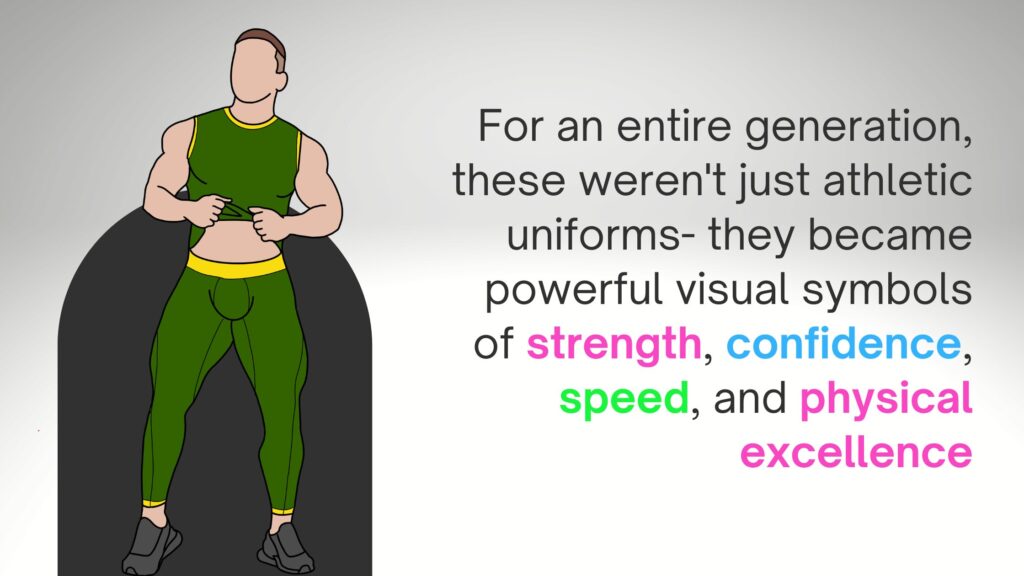
For an entire generation, these weren’t just athletic uniforms- they became powerful visual symbols of strength, confidence, speed, and physical excellence.
Many people who identify with the spandex community today can trace their fascination back to those early experiences. They didn’t discover the interest through pornography. They discovered it through sports broadcasts, comic books, Saturday-morning cartoons, or the Olympics.
The Internet Didn’t Create the Community? It Connected It
Before the Internet, many enthusiasts believed they were completely alone.
- There weren’t local clubs.
- There weren’t podcasts.
- There weren’t social media groups.
As online forums, message boards, Yahoo Groups, Flickr communities, Reddit, Discord, Telegram, and creator platforms emerged, something remarkable happened.
- People discovered they weren’t unusual.
- They were part of a global community.
- Some members were cyclists.
- Some were wrestlers.
- Some collected singlets.
- Some loved Speedos.
- Some were fascinated by zentai suits.
- Others enjoyed running tights or compression gear.
Different interests. One shared language.
Is It a Fetish?
This is where the conversation becomes interesting.
- Not everyone who wears spandex has a fetish.
- Not everyone who enjoys wearing it experiences sexual attraction.
- Some appreciate it for sport.
- Some for comfort.
- Some for fashion.
- Some for body confidence.
- Some for all of those reasons.
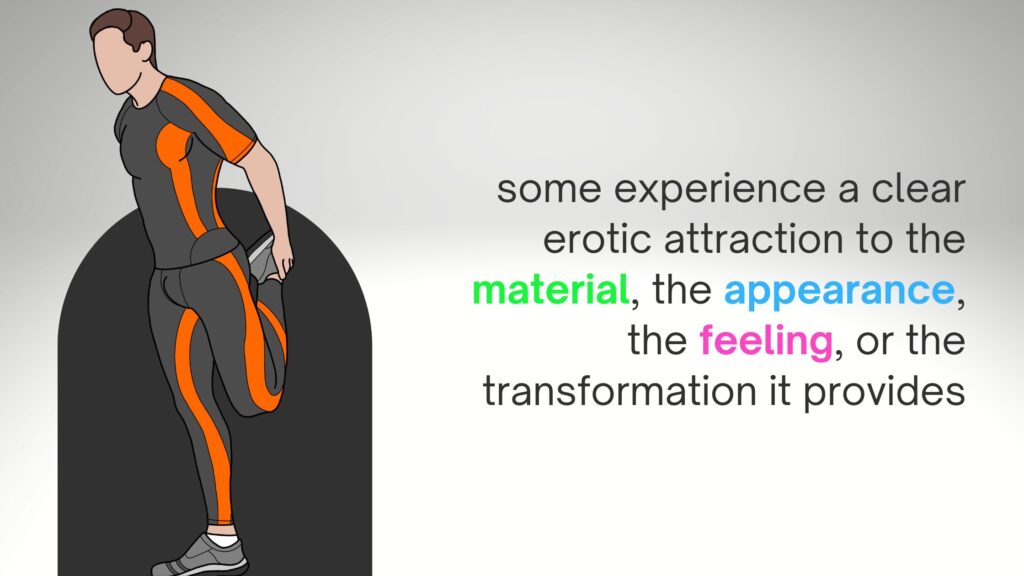
And some experience a clear erotic attraction to the material, the appearance, the feeling, or the transformation it provides. These experiences can overlap, but they are not identical. Recognizing that difference actually strengthens the conversation rather than weakening it.
Why Does the Community Sometimes Feel Invisible?
One of the recurring themes you’ll hear from people in the spandex community is a feeling of not quite fitting anywhere.
Outside the community, enthusiasm for compression gear or skinsuits is often dismissed as just workout clothes.
Inside broader kink spaces, some enthusiasts feel that clothing-based attractions are treated as less serious than more established gear cultures. Whether or not everyone shares that view, the perception itself shapes how many people talk- or don’t talk? about their interests.
Perhaps that’s because spandex is so ordinary. Unlike leather or latex, spandex is something most people encounter every single day.
- It’s on runners.
- Cyclists.
- Swimmers.
- Yoga practitioners.
- Professional athletes.
- Kids playing sports.
That familiarity can make it difficult for others to understand how the same fabric can carry deeply personal meaning for someone else.

It’s About More Than Sex
One of the most surprising discoveries within the spandex community is how quickly conversations move beyond attraction.
- People discuss brands.
- Photography.
- Fitness.
- Travel.
- Fashion.
- Confidence.
- Mental health.
- Friendship.
- Meetups.
- Shared experiences.
Many arrive because they’re fascinated by the clothing.
Many stay because they finally found people who understand them.
As many communities centered on a shared interest, what begins with attraction often grows into something much richer: belonging.
So, Does Spandex Belong in the Kink Community?
Maybe we’ve been asking the wrong question.
Instead of asking whether spandex deserves a place in kink culture, perhaps we should recognize what’s already happened.
Over the past forty years, people from every background, every gender, and every sexual orientation have independently discovered a fascination with the same material. They’ve built friendships, created online spaces, organized events, shared stories, produced art, started podcasts, and formed communities around it.
That isn’t something waiting to become a culture.
It already is one. Spandex doesn’t need permission to belong. It simply deserves to be understood. And maybe that’s the conversation we’ve been avoiding for far too long.
Leave a Reply